Unitree IPO: An Industry Barometer to Watch
TLDR: Unitree’s IPO shows that being a tech pioneer and a profitable company are not mutually exclusive. US startups should take note. Humanoid robotics as an industry is growing, but how big it will get remains an open question. With Unitree going public, we now have a front line seat to market adoption.
Out of the many tech companies founded by DJI alumni, Unitree is arguably the most prolific. Founded by Wang Xingxing, he joined DJI’s engineering team in 2016 and left after two months to start his company. He remains Unitree’s largest individual shareholder, and after building it for a decade, it is very exciting to see them going public this month on Shanghai’s STAR Market.
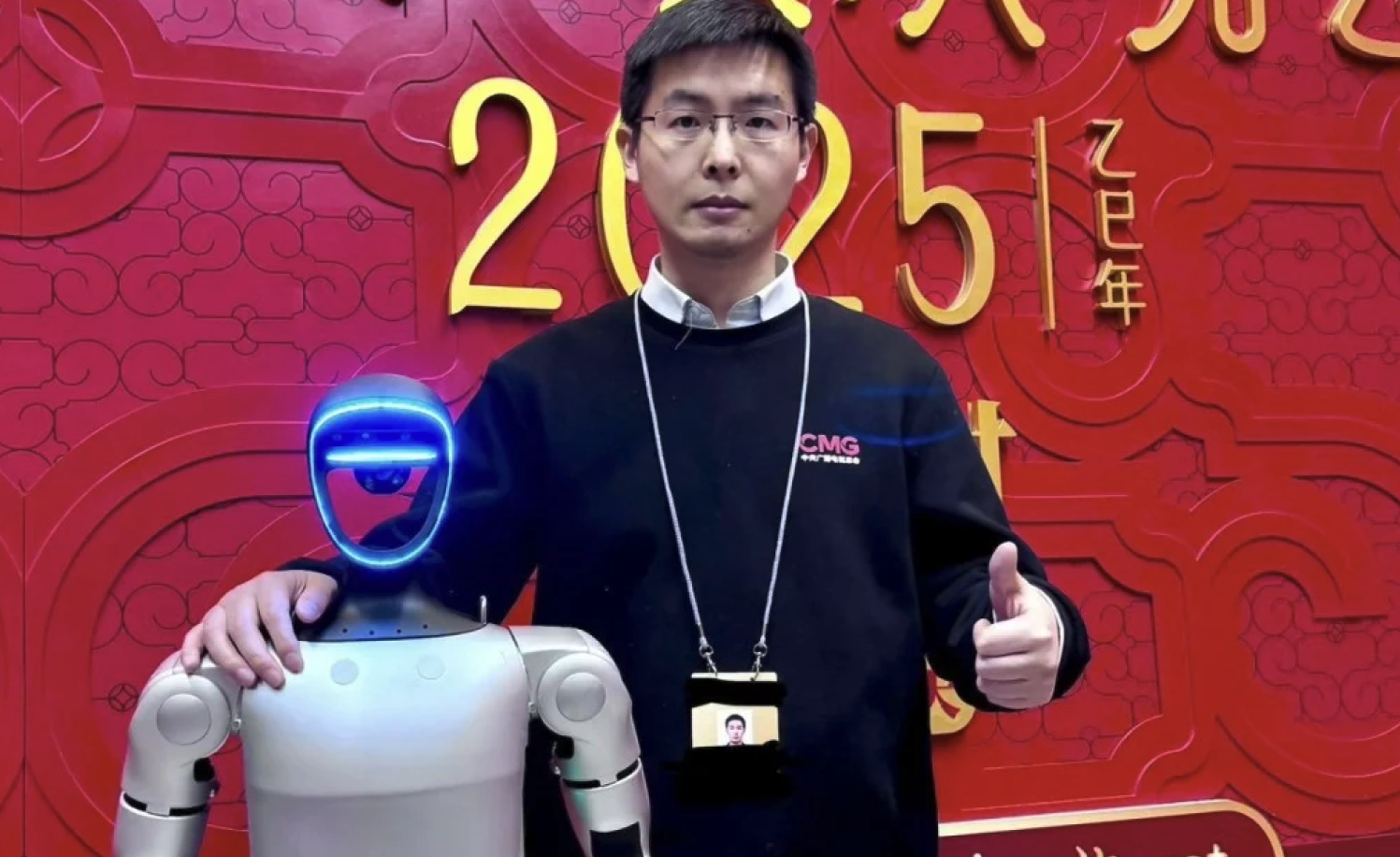
Drones, and robotics more broadly, have been a longtime interest for me, and the IPO is a good time to take stock of where the market is today in terms of adoption, and where the market could be a few years from now.
Two caveats before we dive in: none of this is financial advice, and I am by no means a securities analyst.
Unitree by the numbers
I didn’t see the original CN prospectus listed in Western media, so I put it up here. English machine translation of key sections available here (courtesy of Moonshot AI).
Headline numbers:
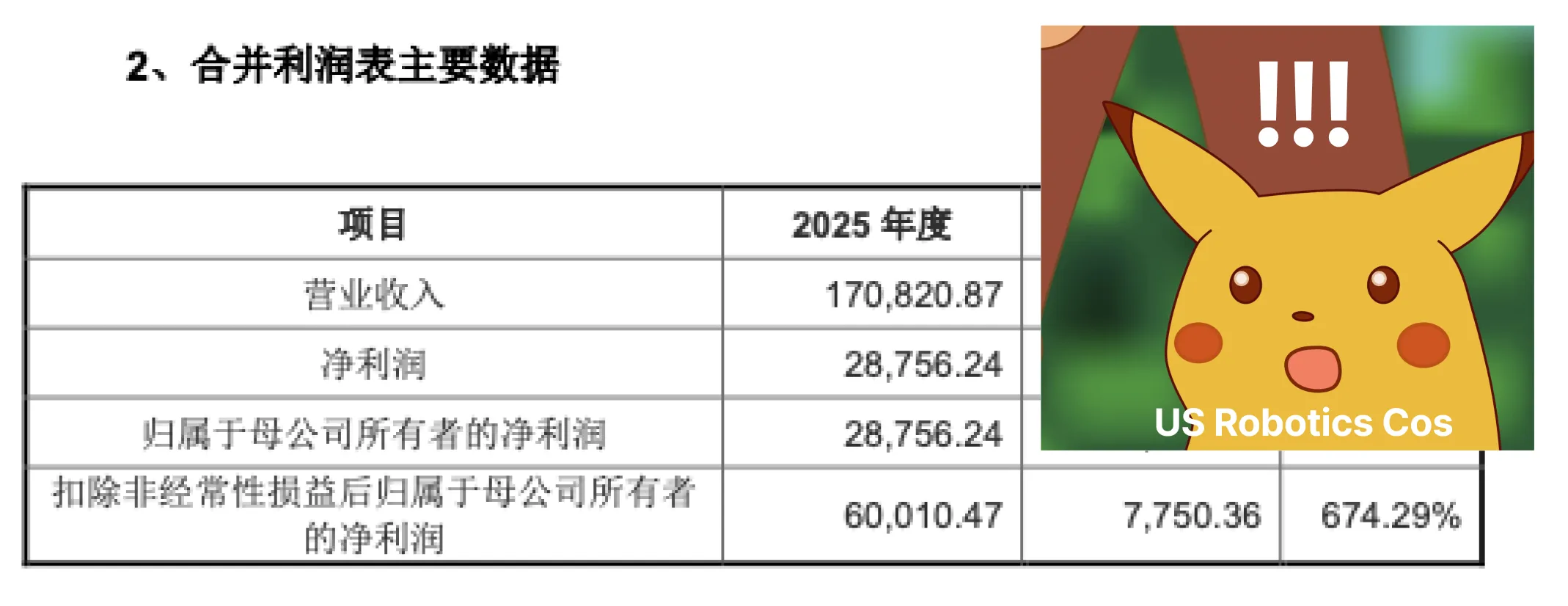
- Revenue: RMB 1,708M (~USD 250M)
- Gross margin: 60.3%
- Annual unit sales (est.): Quadrupeds: 17,946; Humanoids 5,500
- EBITDA: RMB 169M (~USD25M)
- EBITDA margin: 14.5%
- Adj. EBITDA: 534M (~USD 79M) ex. one-off share based comp excluded
- Adj. EBITDA Margin: 45% ex. one-off share based comp excluded
- Implied market cap at IPO: RMB 61B (~USD 9B)
First, a profitable high-tech pioneer? Shocked Pikachu faces all round. It speaks to Wang’s patience in building Unitree as a long-term business versus a speculative bet.
Second, R&D spend is cited as USD 18M for ‘25, which is absurd considering the technical depth and scale of the company. Their full opex for FY25 is estimated at ~36M (ex one-time share-based comp).
As a comparison, US-based Agility Robotics, which is also gearing up for a listing via SPAC, spends 111M on opex while running at a loss. Granted, China offers substantial subsidies, supply chain, and cost-base advantages, but Unitree is still beating out a comparable US company 3:1 on costs, turning a profit, and in a nascent industry. This is nothing to be sniffed at.
Third, implied IPO valuation at 9B on 250M of revenue gives us a 36x revenue multiple, and while profitable, we are still looking at an annual P/E for 2025 of 100–120x after stripping out one-offs.
Finding a good US comparison is hard since valuations for humanoid robotics startups are delulu elevated. Looking at recent and forthcoming listings, none are in the same league as Unitree (looking at you Serve Robotics and Agility). Instead, I’ll arbitrarily take Figma as a comparison:

It would seem that the bookrunners at CITIC took notes from recent US listings when anchoring a price target. And why not? Considering what Wang has built at Unitree, they’re certainly within their rights to ask for a price premium.
In sum, we can describe the Unitree IPO as:
- A real technology pioneer (though not without real competition in CN)
- Scaling up with strong execution and discipline
- Expensive yet comparable to recent US listings
How Many Robots Will the World Buy?
Market sizings are always a fraught exercise, especially in nascent yet high-growth industries like this one. To keep things anchored in reality, a bottom-up market sizing based on latest revenue figures for all the major service, quadruped, and humanoid robotics players gives you a range of 1.2–1.7B (data here).
So, as it stands today, Unitree is asking to be priced somewhere between 5.2–7.5x the total sales of the industry it operates in.
Unitree’s YoY revenue growth was 335%, and a 2-year CAGR of 78.6% between FY2022 and FY2023, implying both the company and the industry are growing at a serious clip. The prospectus itself references a TAM of 15B for humanoid robots by 2030, which seems a rather tight ceiling for the current valuation.
If we set ourselves free of the shackles of empiricism, we can look to the astrologists analysts over at Barclays who speculate a 200B market by 2035. During my time at DJI, the drone industry was getting hit with similar stratospheric market sizings. I never doubted the potential of drone technology to have a significant impact across a broad range of industries, but the timelines are always much longer than anyone anticipates (see Karpathy’s talk about self-driving feeling imminent in 2013). This sets the wrong short-term expectations and destroys ROI for patient capital.
But does a potential scenario for a 200B market by 2035 exist? It might be possible if humanoid robots chance upon a catalysing demand driver. The drone industry had two over the past decade: first as prosumer flying cameras, and second with the Ukraine War. More recently, LLMs found it with code generation. If you believe something like this is inevitable then this is a solid buy. Outside of this, whether Unitree’s CAGR of 78.6% will continue is entirely speculation.
The Government Weighs In
If there is one clear trend in Chinese tech, it’s that when the state deems a technology a national priority, it sees it through to scale. Rare-earth processing, 5G communications, biotech, electric vehicles, and solar have all been nurtured to scale. Semiconductors and robotics are the latest fruits of China’s focussed industrial policy.
Looking back at the history of each of those industries, it is hard to pick out winners from the early days. We can, however, anticipate two consequences:
The first is that each of these industries sees rapid growth leading to domestic overcapacity, which subsequently drives export growth. When looking ahead, it is worthwhile to imagine what is enabled (or not) by high-quality, affordably priced products available en masse globally. Perhaps heeding the lessons of US drone manufacturers from a decade ago, American robotics companies are already positioning to capture the application and intelligence layers rather than only hardware. We’ve also seen that, this time around, trade barriers are already being put in place much earlier.
The second is that it anchors the Chinese public’s expectations that these will be substantial industries and mainstays of their future economy. Unitree’s IPO being 8000x oversubscribed by Chinese retail investors is clear evidence of this. One can expect that they will continue to support its valuation bar a significant loss of market share or fall from the good graces of the state.
Where Will it go from here?
Being the first public scaled humanoid robotics company makes Unitree a strong barometer for the rest of the industry. Anyone interested in the space should watch their unit sales numbers closely as they are a clear signal of market adoption of this technology.
For the IPO itself, it’s expensive but not without precedent. It is also very well timed.